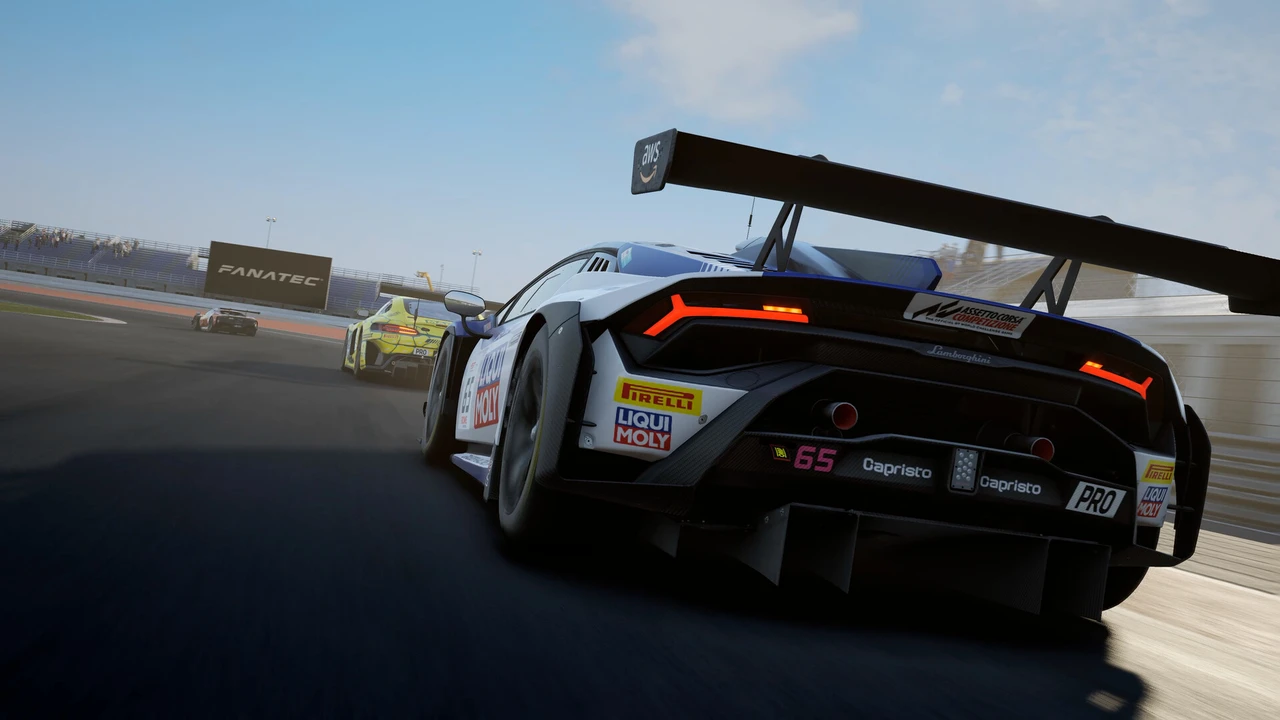
Most drivers chasing lap time in Assetto Corsa Competizione immediately reach for the rear wing adjustment when a GT3 car pushes wide or snaps loose in fourth-gear corners. In practice, your aerodynamic balance in ACC is governed much more by dynamic rake, which is the angle between your front splitter height and rear diffuser height while the suspension compresses on track.
Why Static Ride Height Lies in the Garage
The aero balance percentage shown in the ACC setup screen only measures the car sitting at a steady reference speed. The moment you slam the brakes at the end of the Kemmel Straight, weight transfers forward and compresses the front springs. If your front ride height drops too close to the asphalt, airflow underneath the splitter chokes off. That sudden front aero stall causes the car to wash wide at turn-in, only for the front grip to snap back violently mid-corner as you release the brake pedal.
 Kunos Simulazioni / 505 Games
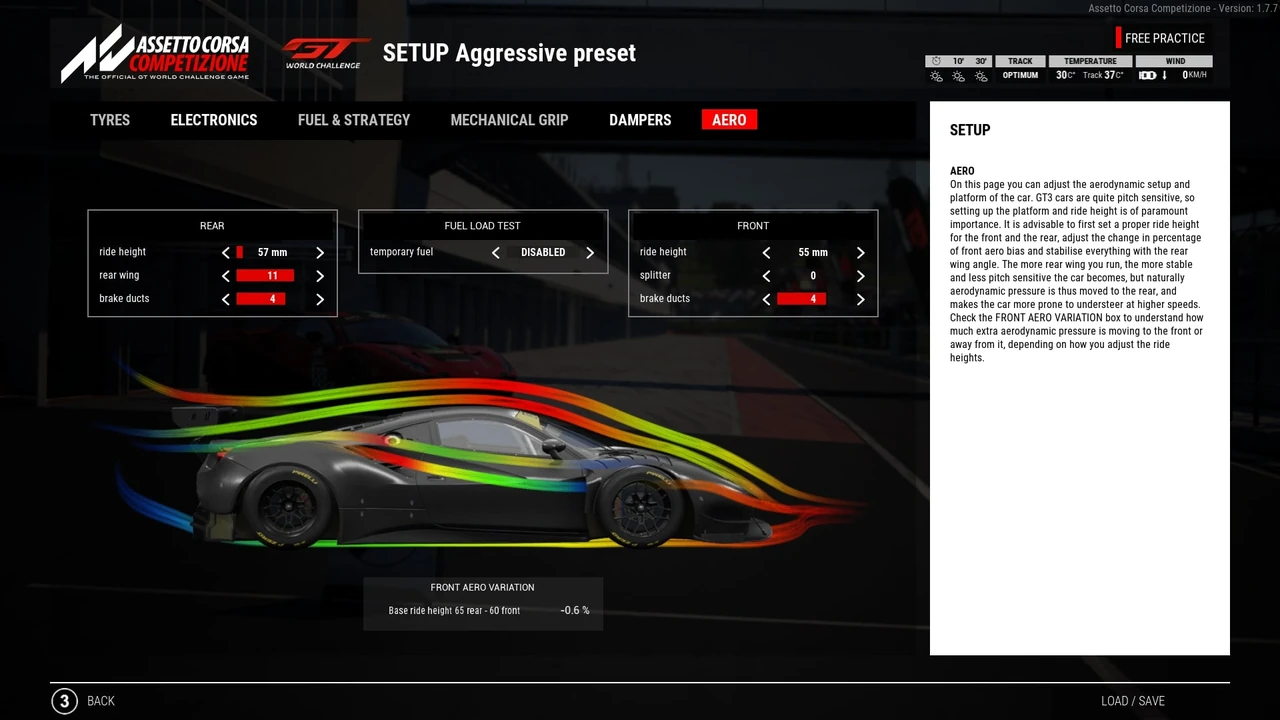
- Front Ride Height: 52 mm to 55 mm above minimum legal clearance
- Rear Ride Height: 68 mm to 74 mm for aggressive diffuser extraction
- Front Bumpstop Range: 8 mm to 12 mm to cap pitch under trail braking
- On-Track Behavior: Sharp mid-corner rotation through technical sectors with higher drag on long straights
- Front Ride Height: 54 mm to 57 mm to clear high-speed kerbs safely
- Rear Ride Height: 60 mm to 65 mm to trim aerodynamic drag
- Front Bumpstop Range: 12 mm to 16 mm for compliant kerb riding
- On-Track Behavior: Stable rear platform through fast sweepers and higher top speed at Monza or Paul Ricard
"If your GT3 car feels planted in slow hairpins but swaps ends the moment you release the brakes in a fast sweeper, your front splitter is pitching too far before hitting the bumpstops."
Tuning Bumpstop Range Before Touching the Wing
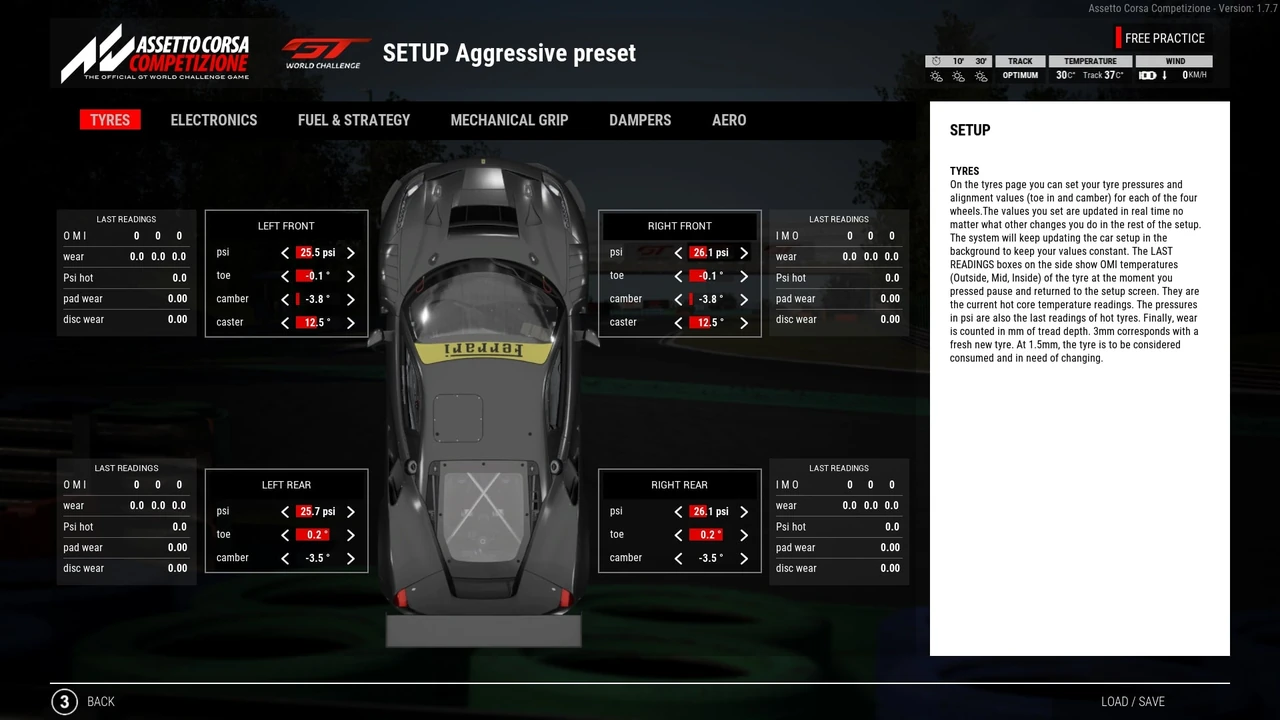
Before adding rear wing clicks that cost you 3 to 4 km/h on the straights, check how much pitch your front suspension allows. Lowering the front bumpstop range in the dampers tab stops the nose from diving too far under heavy braking, keeping the aero center of pressure steady from turn-in to apex. Once the front platform stays flat, you can raise or lower the rear ride height by 1 mm to 2 mm increments to fine-tune oversteer in fast corners without sacrificing straight-line speed.
 Kunos Simulazioni / 505 Games
Always test your ride heights both on a full 100-liter endurance tank and a 15-liter qualifying load in ACC, since rear fuel weight compresses the rear springs and flattens your rake angle early in a stint.