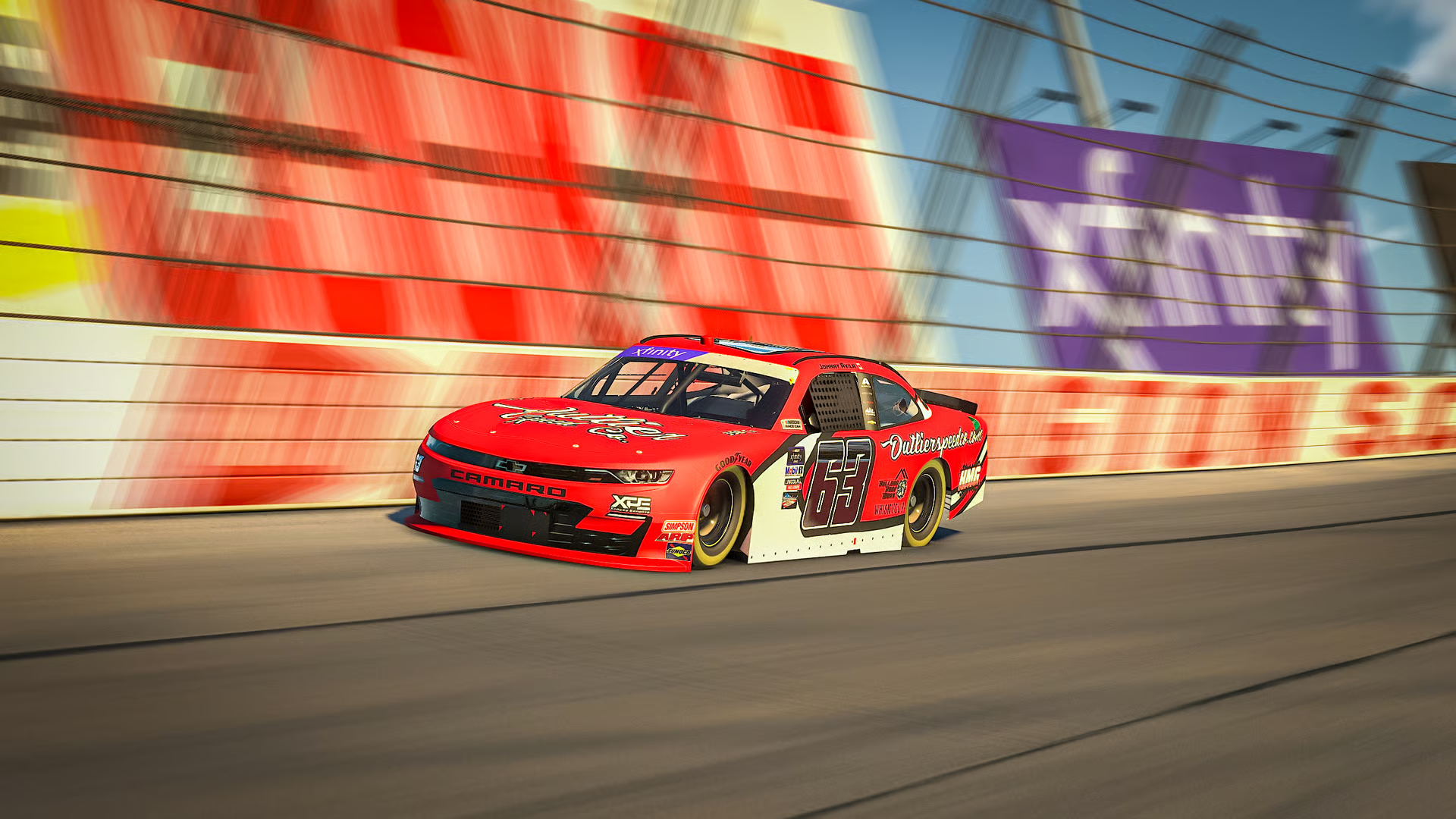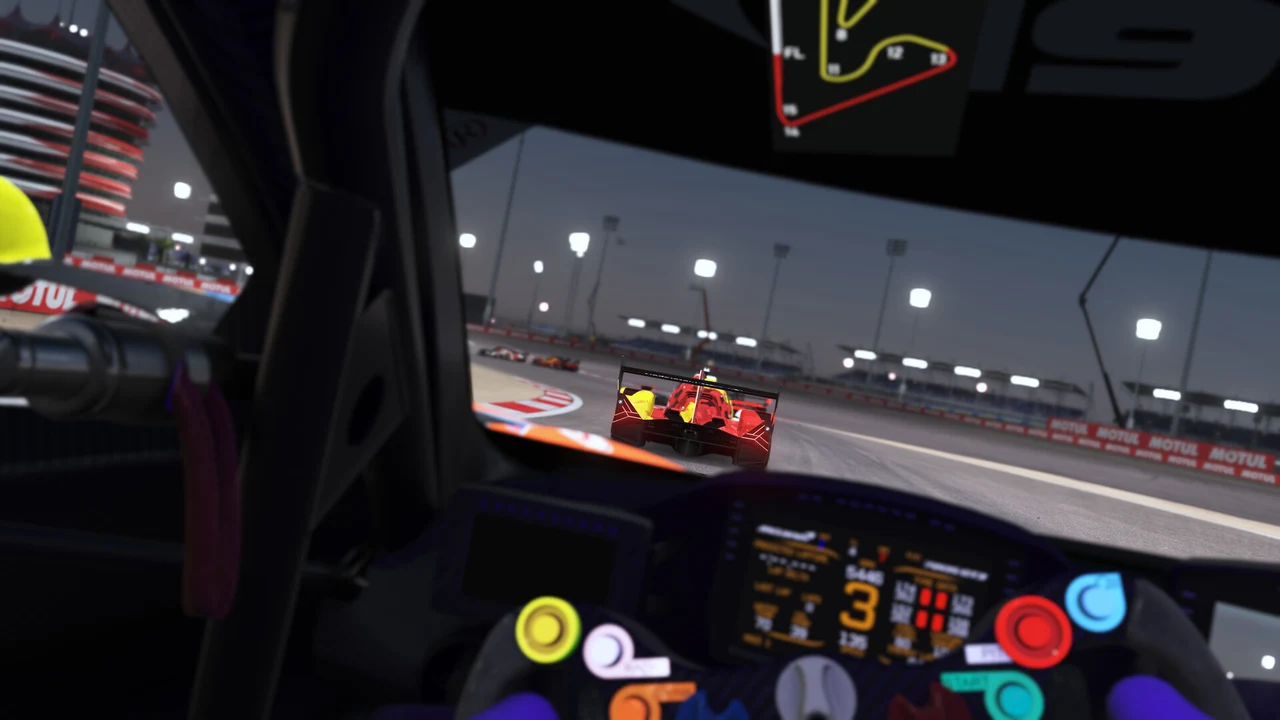
Five years ago, rain in most racing games was little more than a windshield droplet effect paired with a global 20% grip reduction across the entire track. Today, simulators like iRacing, Le Mans Ultimate, and Automobilista 2 calculate surface water depth, track drainage slope, and polished rubber friction, square meter by square meter.
Understanding how software developers model wet-to-dry transitions is the secret to surviving changeable endurance stints without hydroplaning into the barriers.
Why the Normal Dry Line Turns Into Ice First
In both iRacing and Le Mans Ultimate, the dry racing line is saturated with laid-down rubber from hundreds of dry laps. The moment rain begins to fall, water sits on top of that sealed rubber layer, turning braking zones into an ice rink. By steering half a car width off the traditional line onto porous, un-rubbered asphalt, your wet tread blocks can bite into the road surface texture.
Reading the Crossover Window
Once the rain stops and twenty cars pump heat and tire suction across the track, the physics engine evaporates water along the primary racing groove first. Watch for the dark, matte strip of dry tarmac forming through fast corners—and remember to dip your tires into remaining damp patches on the straights to stop your grooved wet tires from overheating before you pit for slicks.