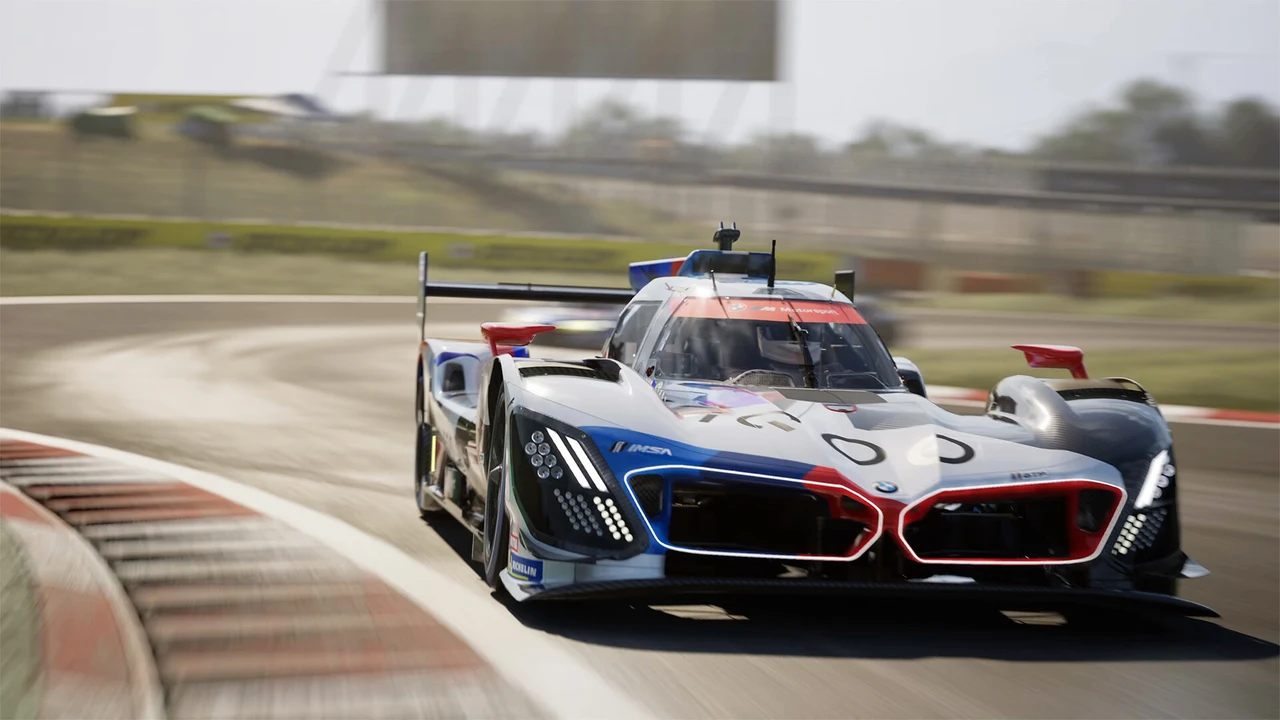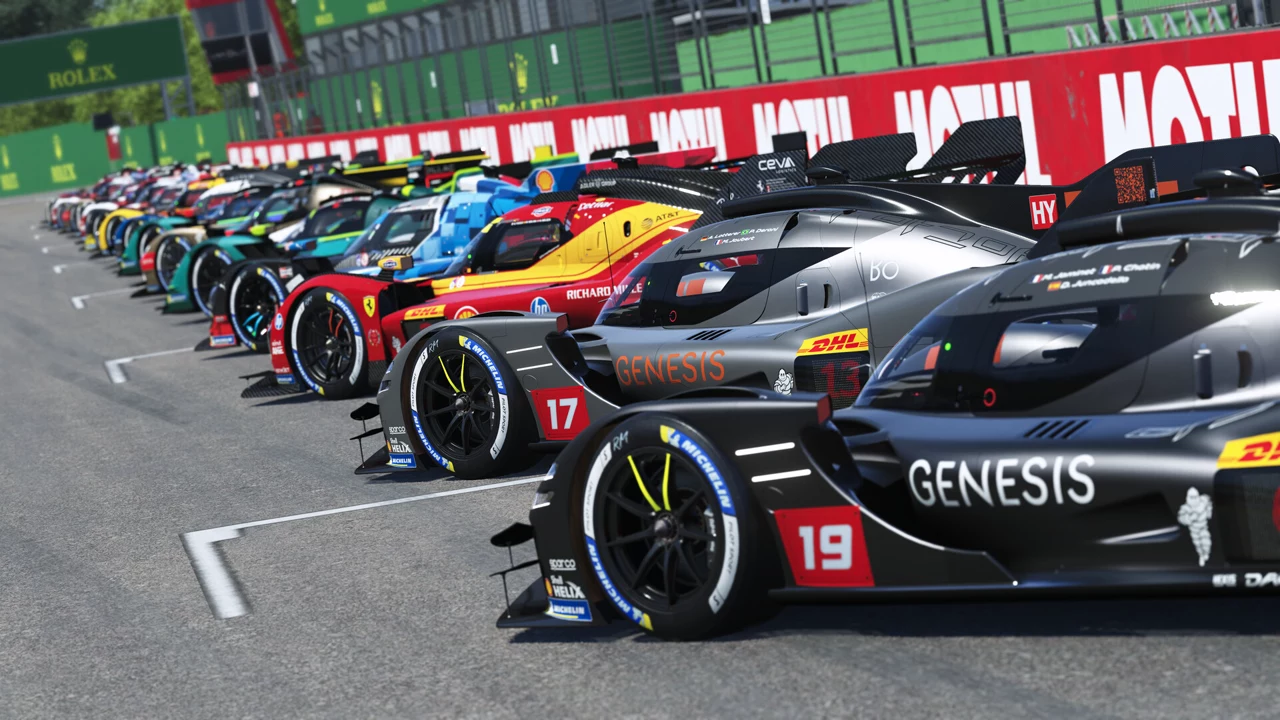
If you jump into an LMDh or LMH prototype in Le Mans Ultimate and brake hard into a slow corner like the Mulsanne Hairpin or Sebring Turn 7, you have probably seen a cloud of white tire smoke pour off your inside front wheel. Even when you click your standard brake bias rearward, the car either locks a front tire at the end of the braking zone or feels dangerously loose when you first hit the pedal at 200 mph.
That exact problem is why modern endurance prototypes use Brake Migration. Instead of locking your front-to-rear brake balance at a single static number from the top of sixth gear all the way to the apex, Brake Migration dynamically shifts your brake bias based on how hard your foot is pressing the brake pedal.
Why a Single Brake Bias Number Fails in Hypercars
At 200 mph down the Mulsanne Straight, a Hypercar produces thousands of pounds of aerodynamic downforce pressing all four Michelin slicks into the road. When you first slam the brake pedal to 100% pressure, weight pitches violently onto the front axle. In that high-speed phase, you need a forward brake bias—typically around 54.0% to 55.0% Front—so the rear tires do not lock up and spin the car instantly.
However, as the car slows down below 70 mph and you begin trailing off the brake pedal to turn the nose toward the apex, two things happen at once: aerodynamic downforce bleeds away, and cornering forces lift weight off the inside front tire. If your brake balance is still stuck at 54.5% Front while you turn in at 25% pedal pressure, that unloaded inside front wheel will lock up and flat-spot immediately.
How Forward Brake Migration Works Under Your Foot
When you dial in a positive setting such as 1.5% or 2.0% Forward in the Le Mans Ultimate garage menu, your baseline brake bias number represents where the balance sits at light pedal pressure near the apex, and the migration value adds forward bias as you press harder.
With a base bias of 52.5% and 2.0% Forward migration, hitting full brake pressure automatically pushes your active brake balance up to 54.5% Front. The rear end stays planted while downforce is high.
As you shed speed and ease your foot back from the peak pressure wall, the electronic brake-by-wire system progressively pulls hydraulic pressure away from the front calipers toward the rear axle.
By the time you turn across the curb toward the apex on light pedal pressure, your bias is back at 52.5%. The inside front tire keeps rolling freely while the rear brakes help rotate the car through the middle of the corner.
Adjusting Migration Live on Your Steering Wheel
Before leaving pit lane, open your controls menu in Le Mans Ultimate and map a thumb rotary encoder to Brake Migration Increase and Brake Migration Decrease right alongside your standard Brake Bias dial.
If the car locks the inside front tire at the very end of the braking zone while turning in, either move your baseline Brake Bias 0.5% rearward OR add one click of Forward Migration while dropping base bias. If the rear end steps out when you first hit the brakes in a straight line, add one click of Forward Migration so peak pressure shifts more work to the front tires.
Protecting Your Front Tires Over a Full Stint
Because FIA WEC rules ban tire warmers and limit total tire sets in endurance events, a single heavy flat-spot on lap three will shake your steering wheel and cost you braking confidence for the next forty minutes. Spending ten minutes in practice pairing a 52.5% base bias with 1.5% to 2.0% Forward Brake Migration lets you brake later and carry cleaner speed into every slow hairpin on the calendar.